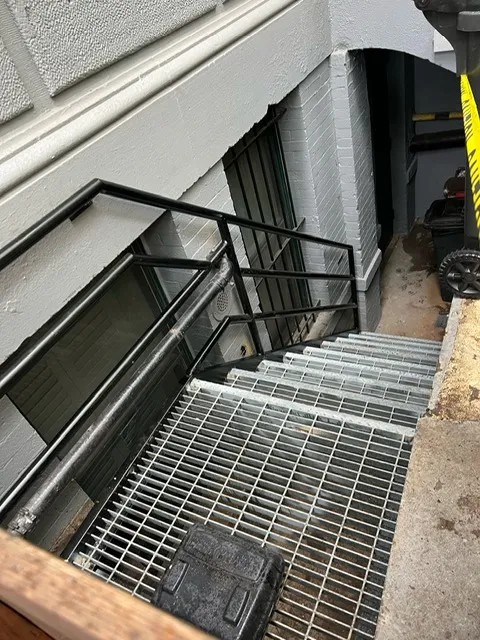
Brooklyn's construction environment is one of the most regulated in North America, and for good reason. The borough's density, aging building stock, and shared party walls create conditions where even a routine steel installation — a new exterior staircase, a sidewalk cellar door, a roof railing — can affect neighboring properties, pedestrian safety, and emergency egress. Understanding the building codes and permit requirements that govern steel fabrication in Brooklyn is not optional for property owners or contractors; it is the baseline for any project that will pass inspection and stand up legally over time. This guide walks through the regulatory landscape as it applies specifically to steel fabrication projects in Kings County.
The New York City Construction Code (based on the IBC with extensive local amendments) defines the standards for structural steel used in buildings and infrastructure throughout the five boroughs. For Brooklyn specifically, projects fall under the jurisdiction of the NYC Department of Buildings (DOB), which administers the Building Code, Zoning Resolution, Energy Code, and a range of specialty regulations covering everything from façade maintenance to sidewalk shed installation. A steel fabricator operating in Brooklyn must be fluent in this framework — not just familiar with it — because errors in filing, design, or inspection coordination can halt a project, generate violations, and expose property owners to significant liability.
The neighborhoods of Brooklyn encompass an extraordinary range of construction typologies: cast-iron commercial facades in DUMBO, masonry rowhouses in Park Slope (ZIP 11215), early twentieth-century industrial buildings in Gowanus, and post-war residential towers in Canarsie and East Flatbush. Each typology has distinct structural characteristics that affect how steel alterations are designed, engineered, and approved. A steel fabricator who works exclusively in new construction may lack the as-built analysis skills needed to navigate an alteration job in a landmark district or a pre-war building with unconventional framing.
Brooklyn's proximity to the waterfront — from Greenpoint and Williamsburg on the East River to Coney Island and Sheepshead Bay on the Atlantic shore — also creates environmental conditions that must be incorporated into steel specification. ASCE 7 wind load requirements, coastal flood zone designations under FEMA FIRM maps, and NYC's own Climate Resiliency Design Guidelines all bear on material selection, connection design, and surface treatment for exposed steelwork. A shop that understands these overlay requirements will produce a product that performs as designed for decades rather than failing prematurely.
Steel Masters NYC | 135 Liberty Ave, Brooklyn, NY 11212 | steelmastersnyc.com | (888) 577-8335
Steel Masters NYC has operated from Brooklyn since 1972, giving the company over five decades of direct experience navigating the NYC DOB permit process for steel fabrication projects. The team works with licensed professional engineers to produce stamped drawings, coordinates permit applications across multiple job types, and manages inspections from rough steel through final sign-off. Clients across Brooklyn — from brownstone owners in Prospect Heights to commercial landlords in Flatbush and Bushwick — rely on Steel Masters NYC to deliver compliant installations that close out without violations.
Installing a new steel staircase — whether interior, exterior, or fire-escape replacement — in a Brooklyn property typically requires a DOB permit under a Type 1 or Type 2 Alteration, depending on the scope of structural work involved. Alt-1 filings (full plan examination) are required when the staircase involves egress changes, occupancy load modifications, or structural alterations to load-bearing elements. Alt-2 filings cover self-certified work where a licensed PE or RA certifies code compliance without a full DOB plan exam. Either route requires stamped drawings showing tread dimensions (minimum 11 inches), riser height (maximum 7 inches), handrail height (34–38 inches), and intermediate rail spacing (no more than 4 inches) per NYC BC Section 1011. Steel Masters NYC handles both filing types and works with a network of PEs experienced in Brooklyn DOB procedures.
Learn what residents say makes a great steel fabricator in Brooklyn
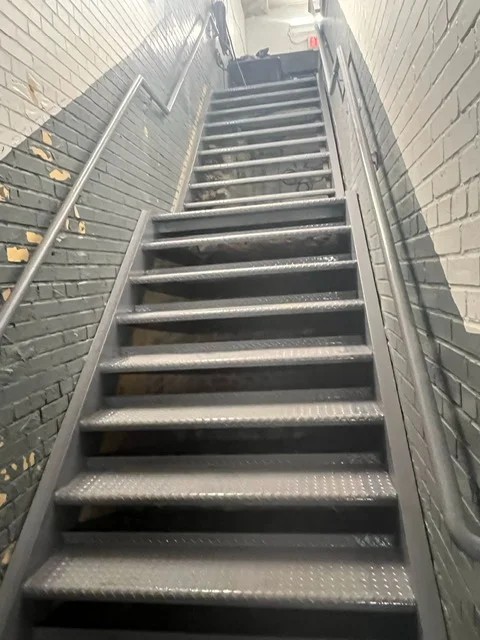
Sidewalk cellar doors — flush-mount steel hatches that provide street-level access to below-grade spaces — require permits from both the NYC DOB and the NYC Department of Transportation (DOT) in most cases. The DOT controls the sidewalk right-of-way, and any permanent structure within that zone requires a Revocable Consent Agreement or a permit under the City's sidewalk work regulations. The DOB simultaneously requires a building permit for the structural connection between the cellar door frame and the building's foundation or framing. Steel Masters NYC is experienced in coordinating parallel filings with DOB and DOT, a process that trips up many contractors who are familiar with only one agency's requirements. Compliance also involves proper load rating — cellar doors in pedestrian zones must typically be rated for H-20 loading (equivalent to a vehicle wheel load of 16,000 lbs) under AASHTO standards referenced by NYC DOT specifications.
Zoning matters for steel fabrication projects in ways that aren't always obvious. In Brooklyn, the Zoning Resolution governs setbacks, height limits, and lot coverage — all of which can constrain where a steel staircase, deck, or railing can be located relative to property lines. In R1 through R6 districts (which cover large swaths of central and southern Brooklyn), rear yard regulations may prohibit structures that would otherwise seem routine. In landmark districts — including Brooklyn Heights, Cobble Hill, Carroll Gardens, and Park Slope — the Landmarks Preservation Commission (LPC) must review and approve any exterior metalwork visible from a public way before DOB will issue a permit. metal fabrication New York shops with LPC experience can navigate the pre-application review, prepare appropriate material samples, and draft the detailed description of work that LPC requires.
Roof railings and guardrails are among the most frequently cited violation categories on Brooklyn buildings, particularly in aging multi-family stock where original metalwork has corroded or been improperly repaired. NYC Building Code Section 1015 requires guardrails at any walking surface located more than 30 inches above adjacent grade or floor level. Minimum guardrail height is 42 inches for commercial occupancies and 36 inches for one- and two-family dwellings. Intermediate rails or balusters must be spaced such that a 4-inch sphere cannot pass through. Structural attachment must resist a 200 lb concentrated horizontal load at the top rail per BC Section 1607.8. Steel Masters NYC fabricates roof railing systems designed and certified to these standards, with surface treatments — hot-dip galvanizing or epoxy primer plus urethane topcoat — appropriate for Brooklyn's coastal exposure environment.
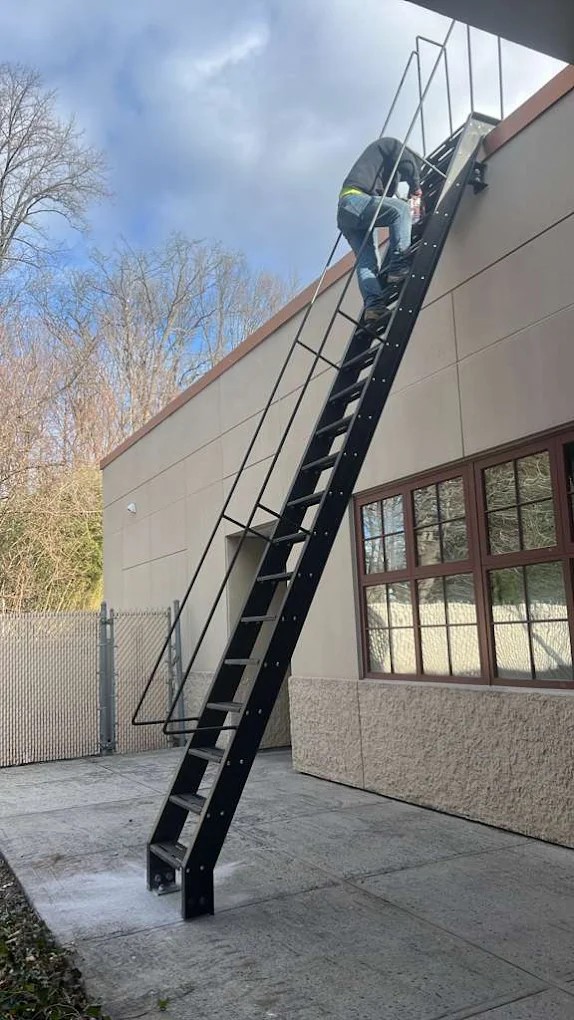
After installation, steel fabrication projects in Brooklyn require DOB progress inspections and a final inspection before the permit is signed off. For structural steel alterations (typically Alt-1 jobs), a Special Inspection program may be required under NYC BC Chapter 17, meaning a licensed Special Inspector must be retained to observe and document welding, bolted connections, and other critical construction activities as they occur — not after the fact. For simpler installations (Alt-2 or NB filings), the PE of record typically certifies final compliance without a Special Inspection program. Either way, obtaining the final sign-off — the TR1 or CO amendment — is the property owner's proof that the installation is legal and code-compliant. sidewalk cellar door installation projects managed by Steel Masters NYC are tracked through to final sign-off so clients are never left with open permits on their record.
Interior steel staircases in multi-family or commercial buildings in Brooklyn are often located within required exit enclosures, which must achieve a fire-resistance rating of 1 or 2 hours depending on building height and occupancy under NYC BC Section 1023. Bare steel is not inherently fire-resistive — it conducts heat rapidly and loses structural capacity at elevated temperatures. Achieving required ratings for steel stair stringers and framing typically involves intumescent fireproofing paint, spray-applied mineral fiber (SFRM), or fire-resistive board enclosure systems. Steel Masters NYC coordinates with fireproofing contractors and ensures that the fabricated steel components are compatible with the chosen fire-resistance system, a coordination step that is often overlooked by fabricators less experienced with occupied multi-family buildings in Brooklyn.
Steel Masters NYC serves customers throughout Brooklyn and Kings County, including Park Slope, Crown Heights, Flatbush, East New York, Brownsville, Williamsburg, DUMBO, Carroll Gardens, Sunset Park, and Bay Ridge. Whether you're in Prospect Heights or Sheepshead Bay, our steel fabrication and iron works team is ready to help with compliant, high-quality metalwork.
Most steel fabrication work that affects structure, egress, or the exterior envelope of a building in Brooklyn requires a DOB permit. Small non-structural repairs — replacing like-for-like baluster pickets, patching a railing — may qualify as ordinary maintenance exempt from permits. However, any new staircase, new railing system, new cellar door, or structural steel alteration will require a permit. Steel Masters NYC advises clients on permit requirements before project kick-off so there are no surprises during construction or at property resale.
Permit timelines in Brooklyn vary by filing type and DOB workload. Self-certified Alt-2 filings can be approved in days; full plan examination for Alt-1 jobs can take 4–12 weeks depending on complexity and examiner queues. Special programs like the Brooklyn DOB Borough Commissioner's office sometimes offer expedited review tracks for projects meeting specific criteria. Steel Masters NYC's PE partners are familiar with Brooklyn DOB procedures and submission requirements, which reduces the back-and-forth that slows many permit applications.
Unpermitted steel fabrication work in Brooklyn can result in DOB stop-work orders, civil penalties (currently up to $10,000 per violation for owner-occupied buildings, higher for repeat offenders), and a requirement to file a legalization application retroactively — which is more expensive and uncertain than filing proactively. At resale, open permits or violations must be disclosed and resolved, often requiring the buyer to accept an escrow or the seller to obtain sign-off before closing. The cost of doing it right the first time is always lower than the cost of remediation.
Yes. In Brooklyn Heights, Cobble Hill, Carroll Gardens, Park Slope, and other LPC-designated historic districts, any replacement or new installation of exterior metalwork visible from a public street or right-of-way requires LPC approval before the DOB will issue a permit. LPC review considers materials, finish, profile, and historical appropriateness. Steel Masters NYC has experience preparing LPC submissions and can recommend finishes and profiles that meet both the commission's standards and the client's functional needs.
For steel railings and exterior metalwork in Brooklyn — particularly in waterfront neighborhoods like Red Hook, Greenpoint, and Sheepshead Bay — hot-dip galvanizing provides the most durable baseline corrosion protection, with a zinc coating that sacrificially protects the underlying steel. Over galvanizing, an epoxy primer and urethane or polyurethane topcoat adds a further barrier and allows color matching to building finishes. Two-part epoxy paint systems without galvanizing are appropriate in less aggressive exposures but require more frequent maintenance. Steel Masters NYC specifies surface treatments appropriate to each project's location and exposure class.